

The Two-Tier Budget Nobody Has Priced In Yet
AI virtual staging has gone from novelty to default this year. Tools now turn an empty room photo into a furnished one in under 15 seconds, for somewhere between £15 and £60 an image. Listings that use it are seeing a 40% jump in online views and a 31% rise in buyer inquiries, at roughly 5% of the cost of a physical staging job that used to run £1,200 to £4,000 a room.
That's a genuine shift, and it's not one property marketers should fight. But it's also not the same product as CGI, and treating the two as interchangeable is how budgets get misallocated. Virtual staging edits a photo of a room that already exists. CGI builds a space, or a whole building, that doesn't exist yet. Confusing the two means either overpaying for a commodity or underpaying for a job that still needs a specialist.
What AI Staging Actually Does
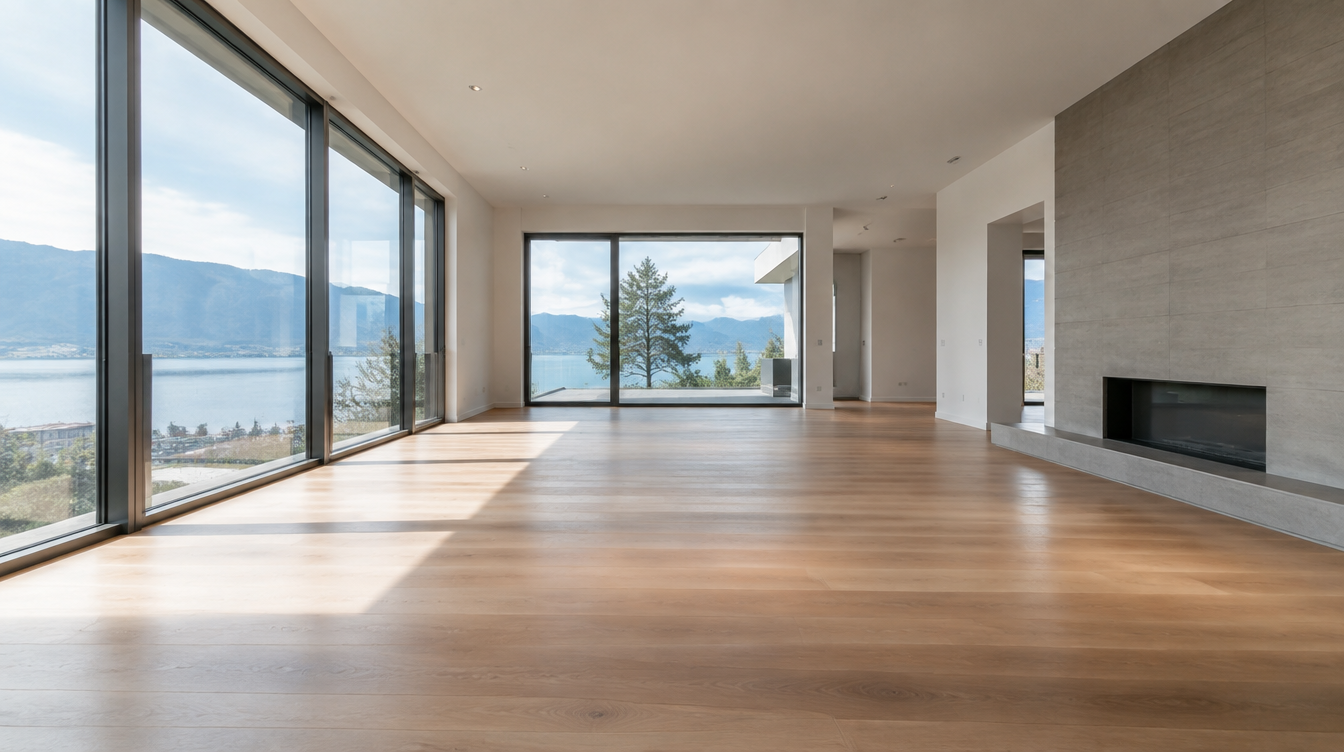
Every current AI staging tool works from the same starting point: a photograph of a genuinely empty room. The AI adds furniture, rugs, lighting, sometimes a repaint, all within the boundaries of what the camera already captured. It's fast because it isn't building anything from scratch, it's dressing a set that's already standing.
That's exactly why it's good at what it does and useless at what it doesn't. It can't show a kitchen extension that hasn't been built, a facade that hasn't gone up, or a communal roof terrace that exists only on a planning drawing. It has no model of the building, just pixels of a room.
The UK Rules Are Already Clear
The Consumer Protection from Unfair Trading Regulations haven't changed for this. ASA guidance is consistent too: staged images can't materially misrepresent a property's size, condition or character. A furnished version of a genuinely empty room, clearly labelled ("Virtually staged for illustration purposes. Property sold unfurnished."), is fine. A staged image that adds a view that doesn't exist, or hides a defect the AI mistook for a shadow, isn't, and Trading Standards treats the two very differently.
That last point matters more than it sounds. An AI tool tuned to make rooms look appealing can smooth over damp, cracks or poor natural light without being asked to. If a buyer sees the real room later and the defect is still there, that's a misrepresentation problem with your name on it, not the software vendor's.
Where CGI Still Has to Win
None of this touches the jobs CGI was actually built for. Off-plan and unbuilt schemes have no photograph to stage; a rendered exterior, interior or animation is the only visual asset that can exist before completion, and it's the one that carries planning submissions, investor decks and pre-launch campaigns. Bespoke finishes, non-standard layouts, and anything that needs to be shown from an angle no camera could ever reach (a rooftop amenity space, a cutaway floor plan, a night-time exterior with the building lit) are still a CGI job, not a staging one.
The commercial case backs this up. Off-plan units with strong, purpose-built visuals are reported to move two to three times faster than units marketed with generic renders. That gap isn't closing because AI staging exists, it's a different problem AI staging was never built to solve.
The Line to Draw
For a finished, standing, genuinely empty room in a resale property, AI staging is now the sensible default. It's fast, it's cheap, and used correctly (labelled, and not used to paper over defects) it's compliant. Don't commission CGI for that job any more.
For anything that doesn't exist yet, an unbuilt unit, a proposed extension, an off-plan development, a hero shot for a launch campaign, CGI remains the only option that can actually produce the image. That's not a defensive line to hold, it's just where the two technologies stop overlapping.
Quick Answers
Is AI virtual staging legal for UK property listings?
Yes, provided the image is clearly labelled as virtually staged and doesn't misrepresent the property's size, condition or character. ASA guidance and the Consumer Protection from Unfair Trading Regulations both apply.
Can AI virtual staging replace CGI for off-plan sales?
No. AI staging only edits photos of rooms that already exist. Off-plan and unbuilt properties have no photograph to stage, so CGI remains the only way to produce a visual before completion.
How much does AI virtual staging cost compared to CGI?
AI staging runs roughly £15-60 per image. CGI pricing depends on scope, but it's priced per asset built from scratch, not per photo edited, reflecting the difference in what's actually being produced.
Does AI staging carry legal risk for developers?
Yes, if it's used to alter more than furnishings, such as smoothing over damp or defects, or if it's not clearly disclosed. Trading Standards treats undisclosed or misleading staging differently from labelled, furnishings-only staging.
