

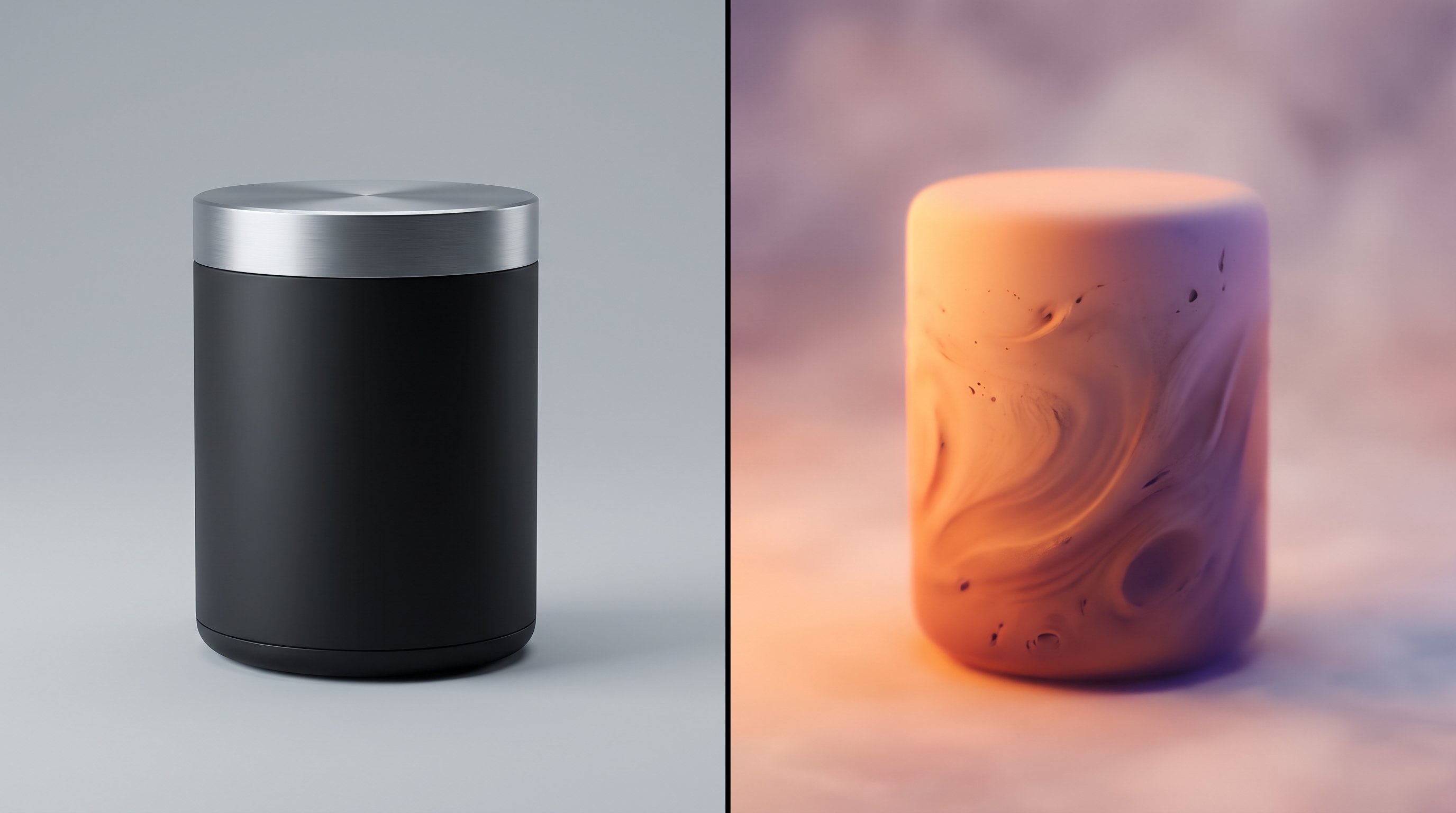
Visual commerce is set to account for 42 percent of total ecommerce ad spend by the end of 2026, and the split between CGI and AI-generated imagery is no longer a style choice, it is a conversion decision.
The Numbers Nobody's Arguing With
Shopify's merchant data shows products with 3D or AR content converting up to 94 percent higher than products shown with standard static images. GANT ran 3D-first product pages across 13 markets and saw a 6.3 percent conversion lift. Gunner Kennels, a US pet-product brand, reported a 40 percent rise in order conversion and a 5 percent drop in returns after switching flagship listings to 3D-rendered pages.
Why AI Images Still Lose on the Metrics That Matter
AI image generators are fast and cheap, and for a lot of low-stakes content that is a genuine win. But for anything a customer will buy against, the weakness is accuracy. AI-generated product shots do not know your product's actual dimensions, materials, or finish, they are pattern-matching against millions of similar-looking things. That is fine for a mood board. It is a liability on a product page.
Returns data backs this up. Merchants adding proper 3D and AR visualization report returns falling by roughly a third compared with flat, static imagery. That is a direct function of accuracy, the customer sees exactly what they are getting because the render is built from real CAD or scan data, not generated from a text prompt. There is also an engagement gap: a Harvard Business Review study found shoppers using 3D and AR tools spent 20.7 percent longer on the retailer's app and viewed 1.28 times more products.
Where AI Actually Wins
None of this makes AI generation useless, it is just the wrong tool for the product page. Where it genuinely earns its place is upstream: ideation, mood boards, quick concept variations for internal review, background exploration before a shoot or render is committed to. It is also useful for marketing assets that do not carry a purchase decision, social posts, ad variations, seasonal campaign backgrounds, where speed matters more than dimensional accuracy.
The Practical Split for 2026 Budgets
For a product designer or brand deciding where to spend, the split for 2026 looks like this: CGI and 3D for anything that sits on a purchase decision, hero shots, product pages, configurators, anything with a buy button near it. AI generation for anything upstream of that, exploration, concepting, and non-purchase marketing content where a slight inaccuracy carries no cost. If you are weighing up whether a product line needs full CGI or can get away with AI-generated imagery, the honest question is: what happens if the image is wrong? If a customer could reasonably return the product because it did not match what they saw, that is a CGI job, not an AI-generation job.
Quick Answers
Do AI-generated images actually convert worse than CGI on ecommerce product pages?
Yes, on the available 2026 data. Products shown with proper 3D or CGI content convert up to 94 percent higher than static images, and AI-generated stills carry the same accuracy risk as static photography since they are not built from real product data.
Does 3D or CGI product visualization reduce returns?
Yes. Merchants using 3D and AR visualization report returns falling by roughly a third compared with static imagery, because customers see an accurate representation of the actual product before buying.
Is AI image generation ever a good fit for product marketing?
Yes, for anything upstream of the purchase decision, concepting, mood boards, social and campaign content where dimensional accuracy does not matter.
How much of ecommerce ad spend is going to visual commerce in 2026?
Visual commerce, including 3D and CGI content, is projected to account for 42 percent of total ecommerce ad spend by the end of 2026.
