

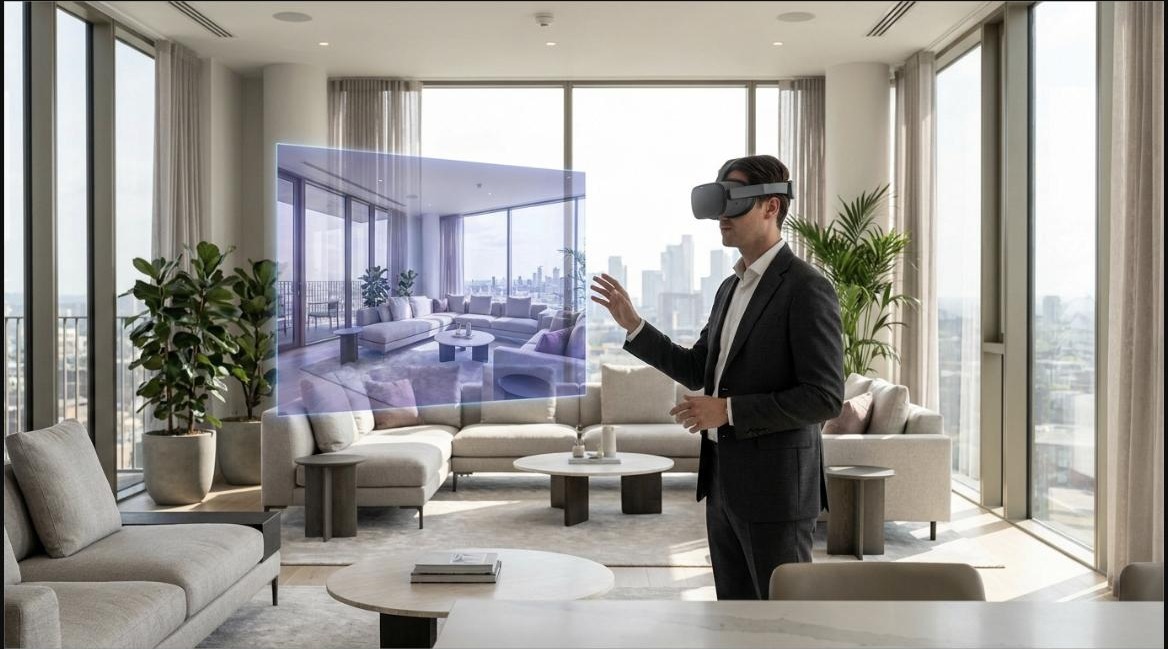
The Baseline Has Moved
A stat worth sitting with: 95% of buyers now say they'd rather take a VR tour before booking an in-person viewing than go in cold (Hitem3D, 2026). That's not a preference for early adopters — that's most of your buyer pool telling you how they want to shortlist before they'll give you their time.
For property developers, this flips the usual sales funnel. The VR tour isn't a nice extra sitting alongside the brochure and floor plan — it's becoming the first filter buyers use to decide whether a viewing is worth their afternoon. If your sales suite doesn't offer one, you're not competing on a level field with the developer down the road who does.
Why This Matters Most for Off-Plan
The case is strongest for anything sold before it's built. VR lets a buyer walk a unit that doesn't physically exist yet — multiple floor plans, multiple finish options, all from a single sales office — which is exactly the scenario where static renders and 2D plans struggle hardest to close the imagination gap (Reality Atlas, 2026). Developers using it report faster off-plan conversion and buyers committing earlier in the build cycle, because the emotional decision — "can I see myself living here" — gets answered before scepticism about an unfinished shell sets in.
It also opens up buyers who were never going to visit in person. A tour that works in a browser, no headset required, lets an overseas or out-of-region buyer walk the property remotely and make a real decision, not a guess from a floor plan.
The Access Barrier Has Gone
The old objection to VR — cost, hardware, buyers needing a headset — doesn't really hold anymore. WebXR means a tour now runs in a browser tab with no app download and no goggles. Cloud streaming means the heavy 3D file doesn't need to live on the buyer's device. Apple Vision Pro and equivalent headsets are pushing a genuinely premium tier for high-end developments, but the baseline experience is now accessible to anyone with a laptop or phone (PC Tech Magazine, 2026).
That matters for budget conversations. You don't need to spec every buyer a headset to get the conversion benefit — a well-built WebXR tour on your listing page does most of the work.
What This Means for Your Sales Suite
If you're briefing a studio on a launch, the question isn't "should we do a VR tour" anymore — it's where it sits in the buyer journey. Put it upstream of the physical viewing, not as a follow-up after someone's already walked the show home. Use it to qualify interest before you spend sales team time on a viewing. And if you're selling multiple finish options or floor plans, build the tour so a buyer can switch between them live, rather than commissioning a separate static render set for every variant.
The developers getting the most out of this aren't the ones with the flashiest headset demo in the sales office — they're the ones who've moved the tour earlier in the funnel, where it actually changes who walks through the door.
Frequently Asked Questions
Do buyers need a VR headset to use a property tour?
No. Modern WebXR tours run directly in a browser on a laptop or phone. Headsets add a premium layer for high-end developments but aren't required for the tour to work.
Does VR actually improve off-plan sales conversion?
Yes — developers report faster commitment and higher off-plan conversion when buyers can walk an unbuilt unit in VR rather than relying on renders and floor plans alone.
Where should a VR tour sit in the buyer journey?
Before the in-person viewing, not after. Buyers are increasingly using it to decide whether a viewing is worth booking in the first place.
Is VR only worth it for luxury developments?
No — the biggest access barrier (cost, hardware) has largely gone with browser-based WebXR. Premium headset experiences are an added layer for top-tier developments, not a prerequisite.
