

What the BBC actually found
On 7 November the BBC reported on AI-furnished photos on Rightmove listings in Sussex. Many carried no disclosure at all. Some were watermarked "Virtually staged" or "Artificially enhanced". Buyers and renters said they wasted viewings on homes that looked nothing like the photos. Rightmove's position is that AI-generated imagery is acceptable when it is plainly marked, that agents are responsible for what they upload, and that it can require changes or remove listings. No new rule was announced. The story is about disclosure, not the technology.
Why this matters if you sell off-plan
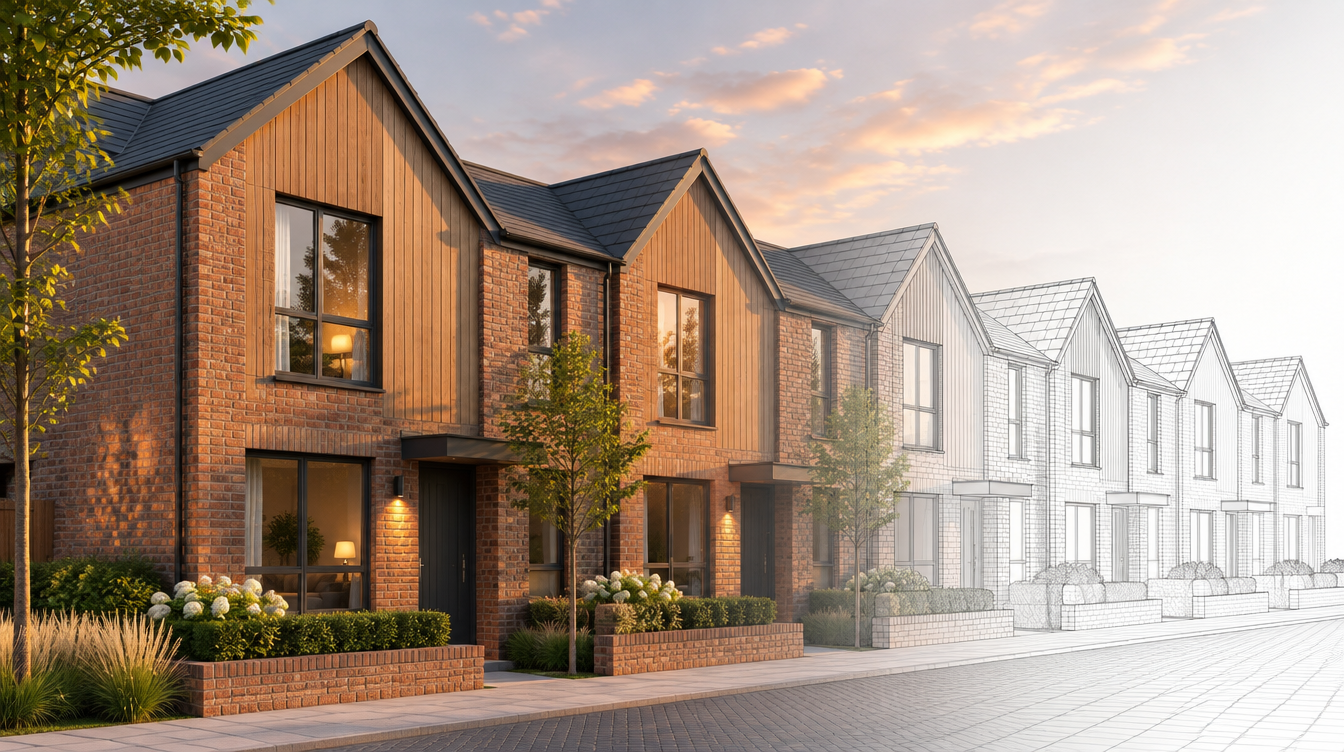
CGI of an unbuilt home is not an edited photo of a real room. It depicts a design that does not exist yet. But a buyer scrolling a portal cannot tell a CGI from a virtually staged photo from an AI-edited one, so the distrust spreads to everyone. The cost lands on the developer. The ASA's CAP Code is media-neutral, and law firm Lewis Silkin's June 2026 summary of the ASA's AI guidance says advertisers remain responsible for AI-generated content. Treat every image as something you will have to defend.
The price rule you cannot ignore
The ASA's guidance on new-build and off-plan homes says prices must relate to the product pictured (CAP Code rule 3.17). If an image includes optional upgrades, use a "from" price, put the words "image includes optional upgrades at additional cost" next to the image as prominently as the price, and state the upgrade cost where you know it. For example, "from £90,000, home shown £95,000". One caveat: that page does not mention CGI or artist impressions directly. Applying the same principle to CGI is our reading, not stated ASA advice, so confirm with CAP's Copy Advice service before you rely on it.
A five-point labelling checklist for off-plan CGI
1. Label the image itself. Put "CGI of proposed development" on the image, not only in a caption that a portal might crop.
2. Say what it shows. Name the plot, the house type and the specification, and flag anything that is an optional upgrade.
3. Pair it with real evidence. Add dated site photography, drone footage or completed show home photos next to the CGI, so buyers can see what is real and what is proposed.
4. Never stage a completed home with unlabelled CGI furniture. If you virtually stage an unsold completed home, mark every staged image and include an unstaged photo of the same room.
5. Keep a paper trail. File the brief, the architect's drawings the render was built from, the version and the date. If an image is challenged, you can show exactly what it was based on.
How to brief your visualiser
Ask for labelled versions of every image in the delivery, not just the clean ones. Agree upgrade call-outs and the spec list up front, and ask which drawings each render was built from. It costs nothing at brief stage and saves a re-issue when a portal or a trading standards officer asks questions.
FAQ: labelling CGI on property portals
Does Rightmove allow AI or CGI images in listings?
According to the BBC report, Rightmove accepts AI-generated imagery when it is plainly marked as such, and says agents are responsible for what they upload.
Is CGI of an unbuilt home the same as AI virtual staging?
No. CGI shows a design that does not exist yet, while virtual staging alters a photo of a real room. Both should be labelled so a buyer knows what they are looking at.
Can off-plan CGI show upgrades?
Yes, if they are flagged. ASA guidance asks for a "from" price and the words "image includes optional upgrades at additional cost" next to the image, as prominent as the price.
Who is responsible for a misleading property image?
The advertiser. Rightmove says agents answer for their uploads, and the ASA treats advertisers as accountable for AI-generated content.
Related reading
What Rightmove's October 2026 New-Homes Guidelines Say (and Don't Say) About CGI
AI Virtual Staging Is Taking the Bottom of the Market - Here's Where CGI Still Has to Win
Unsold Completed Homes? Why a Visual Refresh Beats Another Price Cut
